
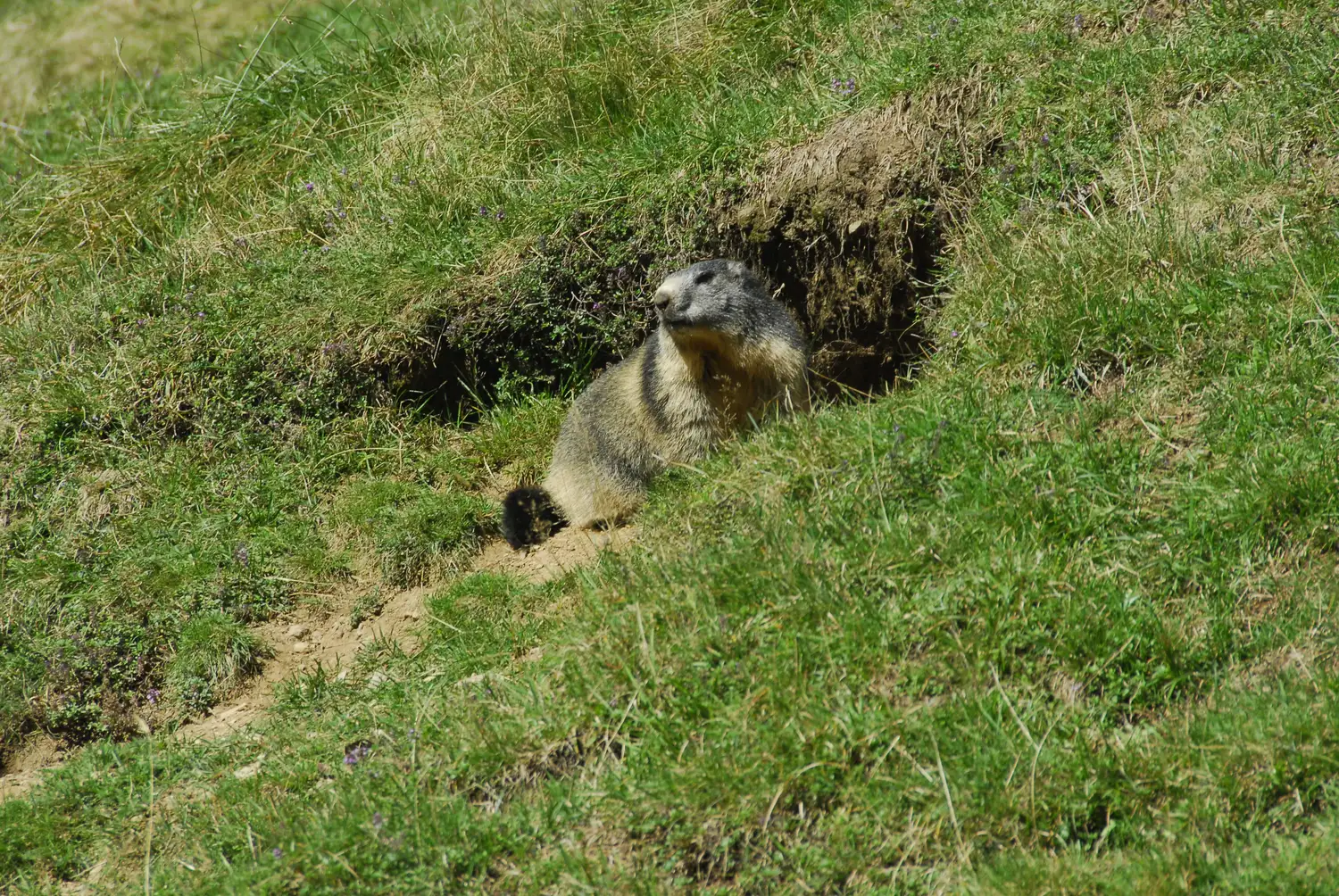
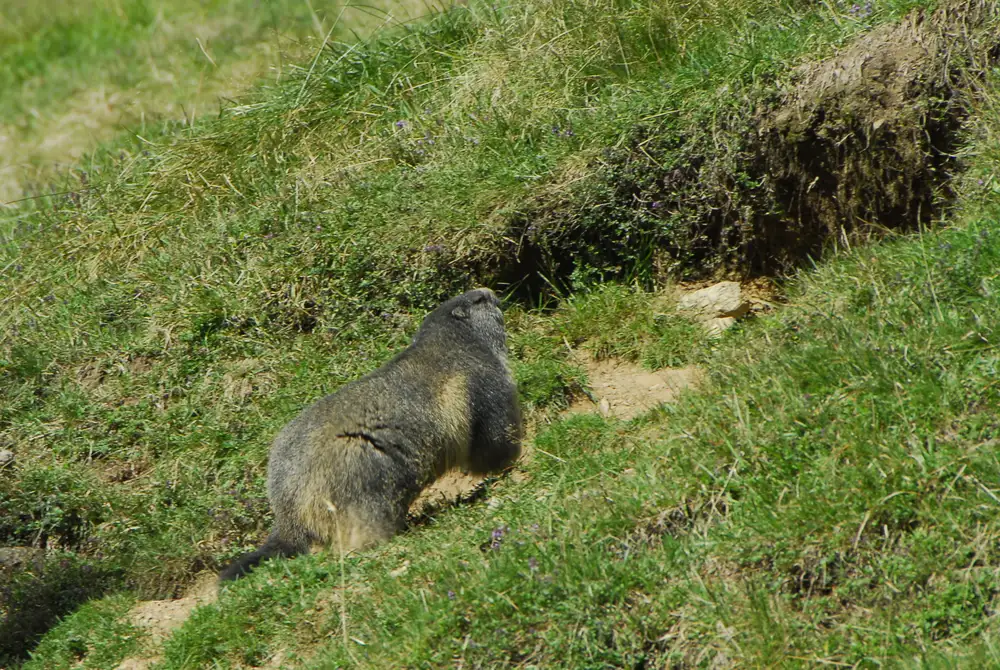
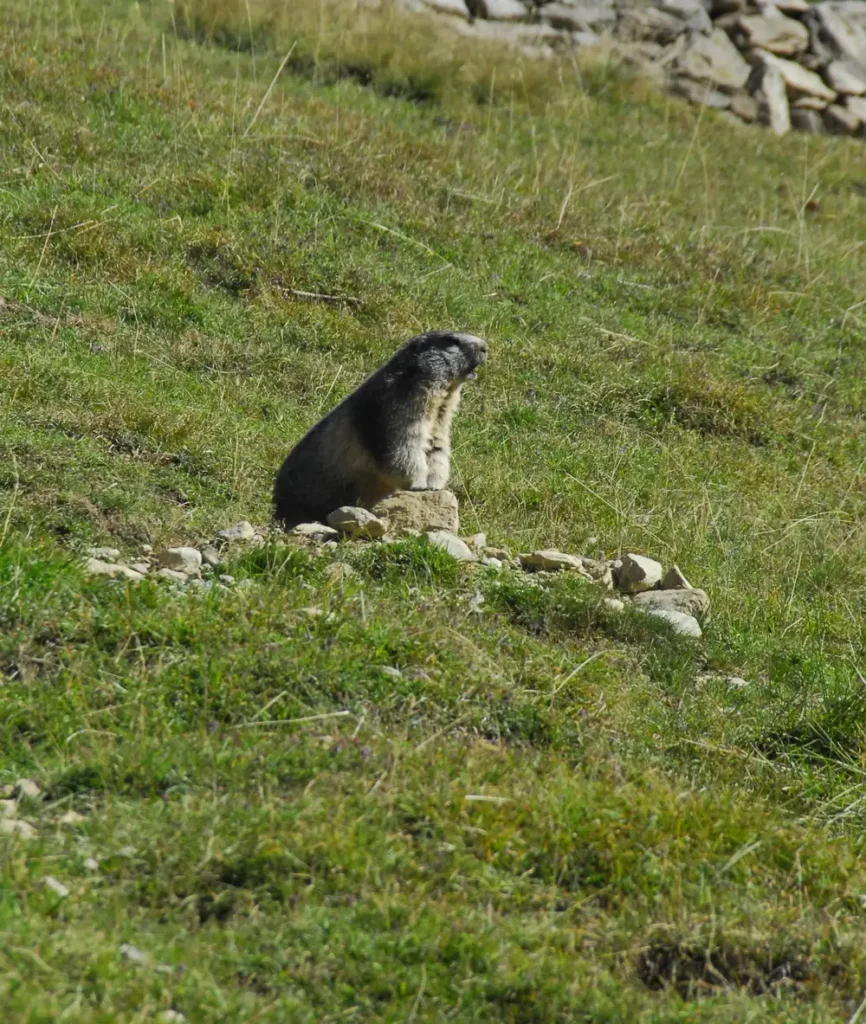
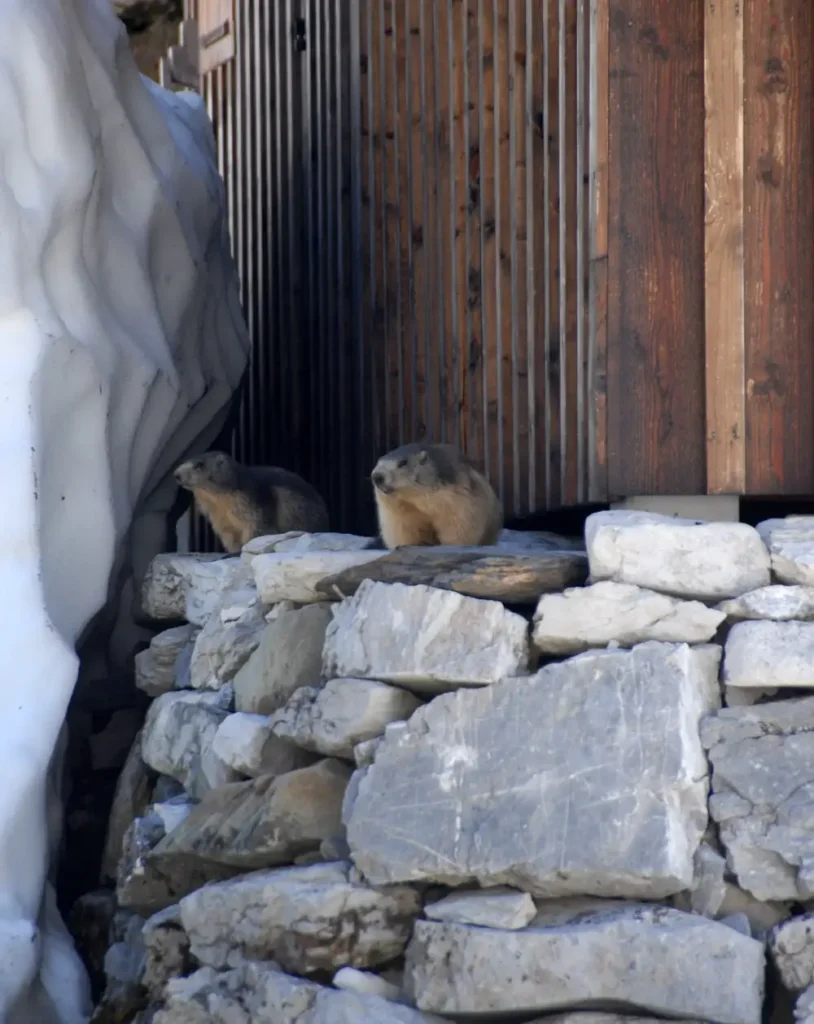
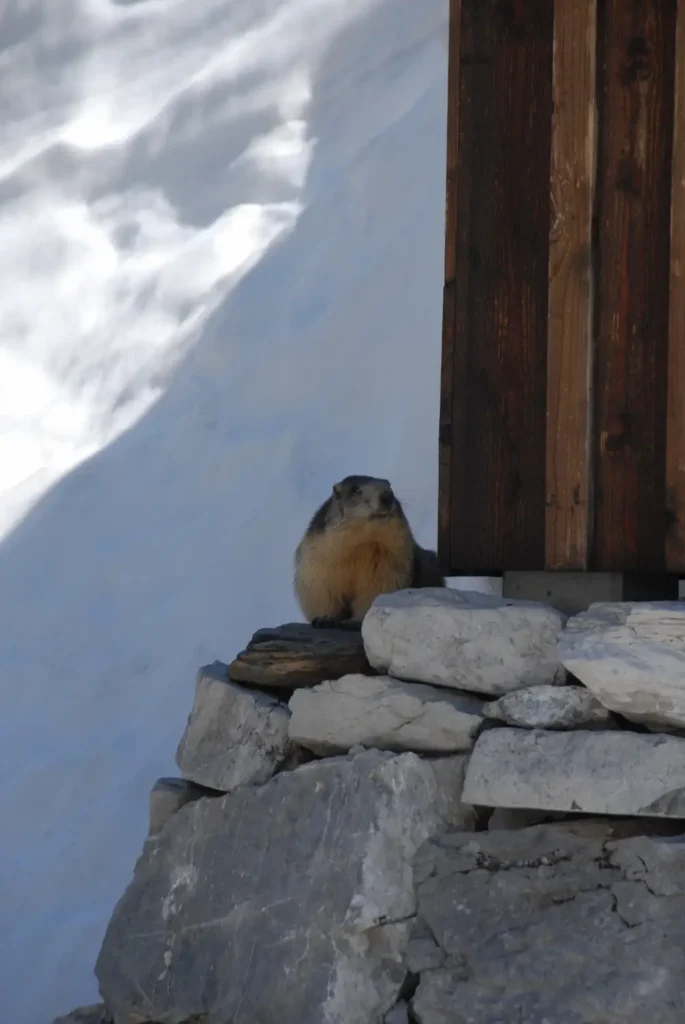
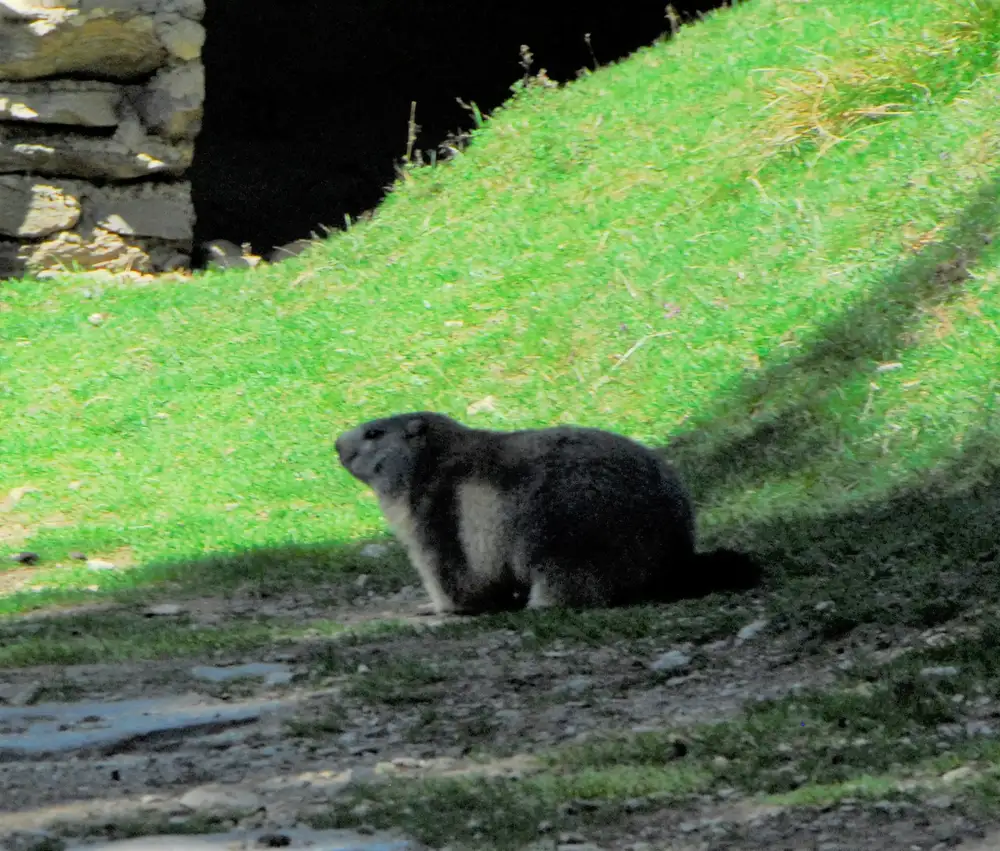
Marmots, those adorable mountain rodents, are emblematic of the Alpine landscapes. Easy to observe during the fine days, they delight young and old with their characteristic whistles and curious attitude. Haute-Savoie is full of perfect places to see them in their natural habitat. Here is a selection of the best spots to meet these endearing animals!
1. Parc de Merlet: an immersion in the heart of nature
Located above Les Houches, the Parc de Merlet is an exceptional site where mountain animals roam semi-freely. Marmots, ibex, and chamois share this territory offering a breathtaking view of Mont Blanc.
Why go there?
- Guaranteed marmot observation thanks to a protected area.
- Spectacular setting with a panorama of the Aiguilles de Chamonix.
- Marked trails for a walk accessible to the whole family.
Practical information:
- Type: semi-wild animal park.
- Difficulty: very easy (marked trails).
- Duration: 1h30 to 2h visit.
- Access: by car, or on foot from Les Houches for the more sporty (beware, it climbs steeply).
- Open from May to October. Attention, the park will be closed in 2027 for maintenance.
- Bring binoculars to better observe animals from a distance.
2. The Mer de Glace and Montenvers: marmots and glaciers
Accessible from Chamonix via the Montenvers train, the Mer de Glace offers a unique setting to observe marmots. Near the glacier, they like to settle on sun-exposed rocks.
Why go there?
- Combining animal observation with the discovery of an impressive glacial site.
- Possibility to visit the Ice Cave and the Glaciorium after meeting the marmots.
- Easily accessible thanks to the cog railway.
Practical information:
- Type: developed tourist site (train + short trails).
- Difficulty: easy (little walking, some steps/stairs to the cave).
- Duration: 2h to 3h on site (train ride included).
- Access: Montenvers cog railway from Chamonix station.
- Advice: arrive early morning or late afternoon, times when marmots are most active.
3. The Sixt-Fer-à-Cheval Nature Reserve: a wild jewel
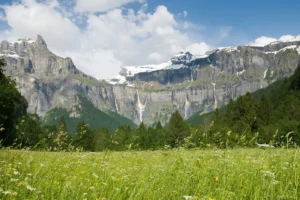
This preserved site, one of the largest natural cirques in Europe, is a haven of peace for many alpine species, including marmots.
Why go there?
- Hiking in a spectacular setting with waterfalls and imposing cliffs.
- Diverse fauna: marmots, chamois, eagles, and bearded vultures.
- Trails accessible for all levels.
Practical information:
- Hikes start from the village of Sixt-Fer-à-Cheval.
- Best period: from June to September.
- Bring a picnic to enjoy the setting.
4. Col des Aravis: ideal summer spot
Easily accessible by car from La Clusaz, the Col des Aravis is one of the best places to observe marmots without much effort. These rodents like to bask on sun-exposed rocks.
Why go there?
- Ideal for families with young children thanks to easy access.
- Magnificent landscapes between alpine pastures and peaks.
- Possibility to combine observation with a gourmet break in mountain chalets.
Practical information:
- Type: direct observation from the pass, no hiking needed.
- Difficulty: very easy.
- Duration: 30 min to 1h walk around the pass.
- Elevation change: low (a few dozen meters if you walk away from the parking lot).
- Access: Col des Aravis road, parking at the pass.
- Advice: bring a pair of binoculars and be discreet to better approach the marmots.
5. Lac Blanc: high altitude observation
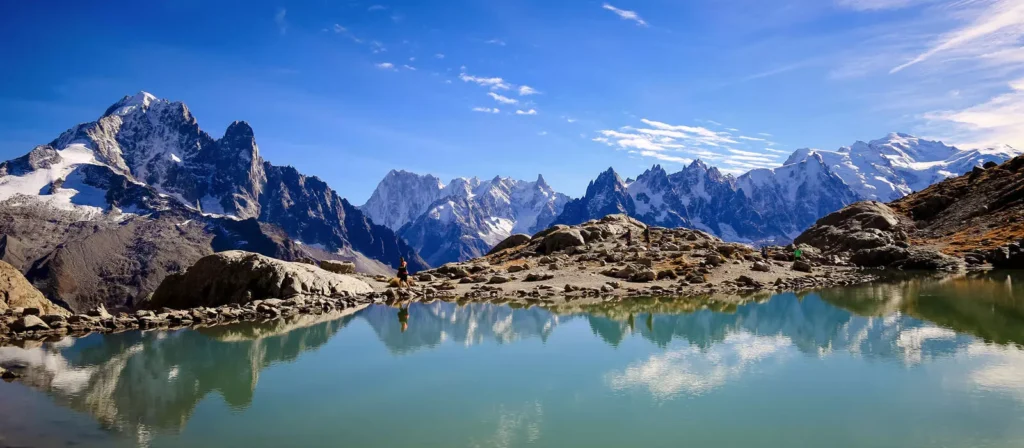
Located in the Aiguilles Rouges massif, Lac Blanc is a must-see site for hikers and alpine wildlife lovers. On the path leading to the lake, many marmots watch the walkers.
Why go there?
- One of the most beautiful hikes in the Alps with an exceptional view of Mont Blanc.
- Many marmots visible on the trails before reaching the lake.
- Possibility to also see ibex and chamois.
Practical information:
- Type: mountain hike.
- Difficulty: moderate.
- Duration: about 3h round trip.
- Elevation change: about +450 m.
- Access: departure from the Flégère cable car.
- Bring a jacket, the climate is often cool at altitude.
To read: Lac Blanc in Chamonix: the must-do hike facing Mont Blanc
6. Col de la Colombière: marmot paradise
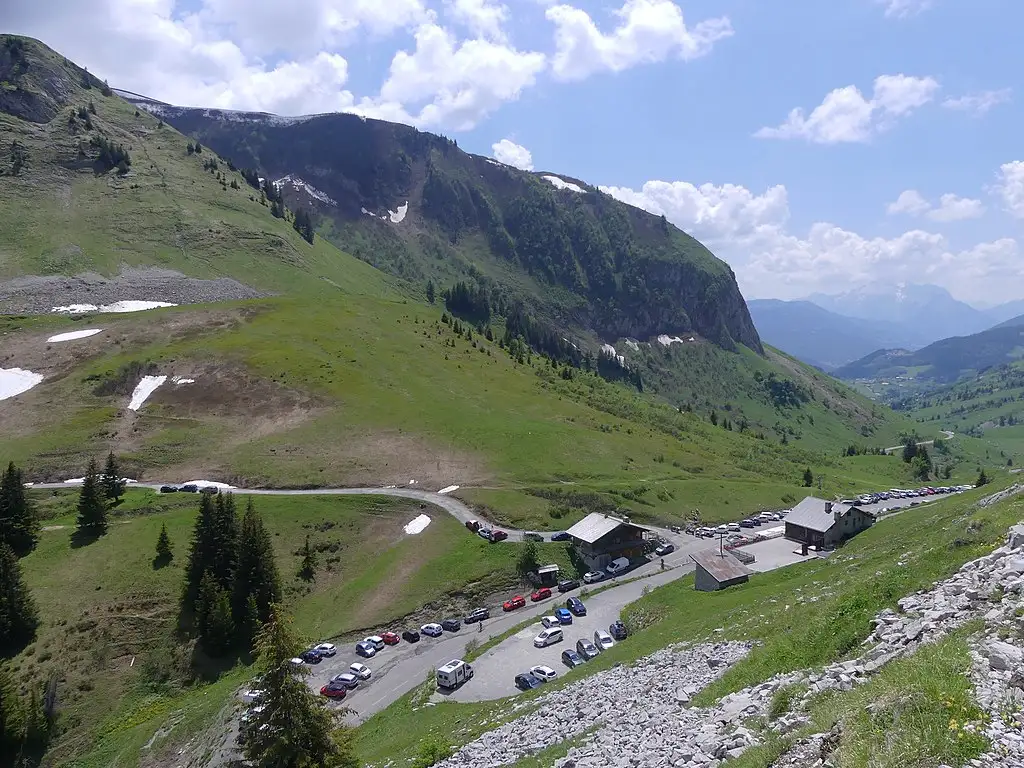
Located between Le Grand-Bornand and Le Reposoir, the Col de la Colombière is a privileged site to observe marmots in a preserved alpine setting.
Why go there?
- Abundant presence of marmots, often visible on sunlit slopes.
- Exceptional panorama of the surrounding massifs.
- Pleasant hike with little elevation gain, ideal for a family outing.
Practical information:
- Type: observation at the pass + optional short hike.
- Difficulty: easy.
- Duration: 1h to 1h30 for the loop to Lac de Peyre.
- Elevation change: low, about +150-200 m.
- Access: by car from Le Grand-Bornand.
- Best period: between May and September.
- Bring binoculars and a camera to capture these moments.
- After the pass, head towards Le Grand-Bornand: take the trail that goes right in the direction of Lac de Peyre. Marmots are often a bit off the path, but you can easily spot them, as well as some unshy ibex. “A few years ago, I even had an ibex come up to my car window at the pass.”
Summary
| Place | Type | Difficulty | Duration | Access |
|---|---|---|---|---|
| Parc de Merlet (Les Houches) | Animal park | Very easy | 1h30 to 2h | Car or shuttle |
| Mer de Glace / Montenvers | Developed tourist site | Easy | 2h to 3h | Cog railway from Chamonix |
| Sixt-Fer-à-Cheval | Nature reserve | Easy to moderate | 3h30 to 4h round trip | Lignon parking lot |
| Col des Aravis | Direct observation | Very easy | 30 min to 1h | Road, parking at the pass |
| Lac Blanc (Aiguilles Rouges) | Mountain hike | Moderate | 3h round trip | Flégère cable car |
| Col de la Colombière | Observation + short hike | Easy | 1h to 1h30 | Car from Le Grand-Bornand |
Tips and tricks for observing marmots
Be discreet: Marmots are sensitive to noise and sudden movements. Approach them calmly to maximize your chances of observation. Do not get too close either, or you risk scaring them away.
Best periods: Marmots are active between April and October, with a peak of activity in the morning and late afternoon.
Prepare your outing: Wear comfortable hiking shoes, bring water and a camera to capture these magical moments.
Responsible picnic: Respect nature by taking your waste with you and avoiding feeding marmots, as their diet is strictly adapted to their environment.
Whether you are an experienced hiker or a casual nature lover, Haute-Savoie abounds with magnificent sites to observe marmots in their natural habitat. An unmissable experience for all mountain lovers!
Also to see:
- Where to see ibex in Haute-Savoie?
- Discover the waterfalls of Haute-Savoie
- Discover the most beautiful viewpoints over Lake Annecy
- Must-do hikes around Lake Annecy
- 10 must-visit places in Haute-Savoie
FAQ
When to see marmots in Haute-Savoie? Marmots are active from April to October, with a peak of observation in the morning and late afternoon. They hibernate the rest of the year and remain invisible in winter. In summer, they are particularly visible during the hottest hours of the day, when they bask in the sun on the rocks.
Where to easily see marmots, without hiking? Col des Aravis and Col de la Colombière are accessible by car and allow you to observe marmots just a few minutes’ walk from the parking lot. Parc de Merlet offers guaranteed observation without effort, on marked trails suitable for families.
Why do marmots whistle? The characteristic whistle of the marmot is an alarm call issued to warn the rest of the colony of danger, such as the approach of a bird of prey or a hiker too close. Hearing this whistle usually means the marmots have spotted you before you see them.
Can we feed the marmots? No, it is not recommended to feed marmots. Their diet is strictly adapted to their natural environment, and feeding them can disrupt their behavior, make them dependent on humans, or harm their health.
What is the difference between a marmot and a stoat? The marmot is a stocky rodent, weighing several kilos, living in colonies in burrows and hibernating in winter. The stoat is a much slimmer and elongated mustelid, with brown fur in summer and white in winter, which remains active all year and hunts small prey. Both species frequent the same massifs of Haute-Savoie but rarely meet in the same places, the marmot preferring open alpine pastures and the stoat rocky or wooded areas.