In brief
- Reblochon is a raw cow’s milk cheese that originated in the Aravis mountains and the Thônes valley. It has been protected by a designation of origin since 1958.
- The green marker identifies a farmhouse reblochon, made on the farm with milk from a single herd. The red marker identifies a dairy-made reblochon, made at a cheese dairy using milk from several farms.
- Its name comes from « rebloche », a second milking that farmers carried out in secret in the Middle Ages.
- In Haute-Savoie, you can discover it at the Farto cooperative in Thônes, at farms in the Aravis, or at the La Clusaz Reblochon Festival every August.
What is reblochon?
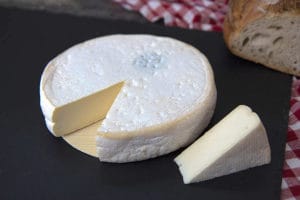
Reblochon, or reblochon de Savoie, is a pressed, uncooked cheese. It is shaped like a flat cylinder about 14 cm in diameter and weighs between 450 and 550 grams. It is made with whole, raw cow’s milk. On average, four litres of milk are needed to make a 500-gram reblochon.
Its washed rind ranges from yellow to orange and develops a fine white bloom. Its paste is soft and creamy, with a more or less pronounced hazelnut flavour depending on how long it is aged.
This is a cheese deeply rooted in Haute-Savoie. Its production area is limited to the mountains of Haute-Savoie and the Val d’Arly in Savoie, and producing it elsewhere is prohibited. Its historic birthplace remains the Bornes and Aravis mountain ranges, and especially the Thônes valley.
« Rebloche »: the story of a cheese born from a trick
The story of reblochon began in the 13th century in the mountain pastures of the Thônes valley. At the time, farmers rented their pastures from monks or nobles and had to pay them a fee calculated according to the amount of milk produced.
So they came up with a very Savoyard trick. On inspection day, the farmers did not fully milk their cows. Once the inspector had left, they carried out a second milking, called « rebloche » in the local dialect. This late-milking milk was richer in cream and fat, making it ideal for cheese. And so reblochon was born.
Made outside the system of dues, reblochon remained a cheese in the shadows for a long time. Its commercial production only really took off around 1860. A century later, on August 7, 1958, it was granted a controlled designation of origin. Its producers were among the very first cheesemakers to receive this protection.
Farmhouse or dairy-made reblochon: green or red marker?
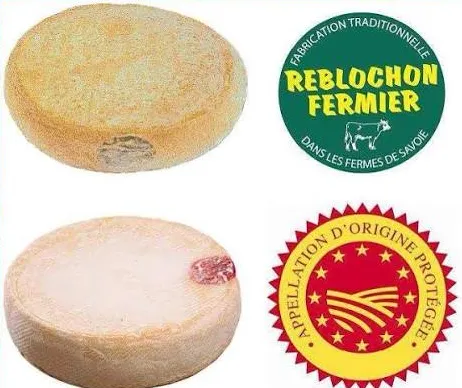
This is the question everyone asks when they reach the cheese aisle, and the answer can be found on the rind. Every reblochon bears a casein marker (a milk protein, so it is edible). It indicates the dairy’s number, the batch and the date of production.
Farmhouse reblochon (green marker) is made on the farm using milk from a single herd, immediately after each of the two daily milkings. The milk is processed while still warm, preserving all its aromas. Its packaging also bears the words « Reblochon fermier ». Its flavour is generally more pronounced.
Dairy-made reblochon (red marker), also called fruitier-style reblochon, is made at a cooperative dairy or cheese dairy using milk collected from several farms in the designated area. It is often milder.
| Farmhouse reblochon | Dairy-made reblochon | |
|---|---|---|
| Marker | Green | Red |
| Milk source | A single herd | Several farms |
| Place of production | On the farm | At a cooperative dairy or cheese dairy |
| Frequency | Twice a day, after each milking | According to milk collection |
| Flavour | More pronounced | Milder |
| Designation | AOP | AOP |
Both are authentic AOP reblochons and are subject to the same production requirements. It is not a matter of quality, but of style: farmhouse reblochon for those who enjoy bold flavours, dairy-made reblochon for a milder taste.
The reblochon AOP: what the designation guarantees
Since 1958, reblochon has benefited from a controlled designation of origin, which became a protected designation of origin (AOP) at European level. Today, it is France’s third-largest cheese designation by volume.
The production requirements govern the entire process:
- The area: the milk production, cheesemaking and aging must all take place within the designated area.
- Feed: cows are fed grass in summer and hay from the area in winter.
- The milk: it must be raw and whole, with no standardisation.
- Aging: it lasts at least fifteen days, and typically six to eight weeks.
It is also packaged on a thin spruce board, which naturally regulates its moisture.
How is reblochon made?
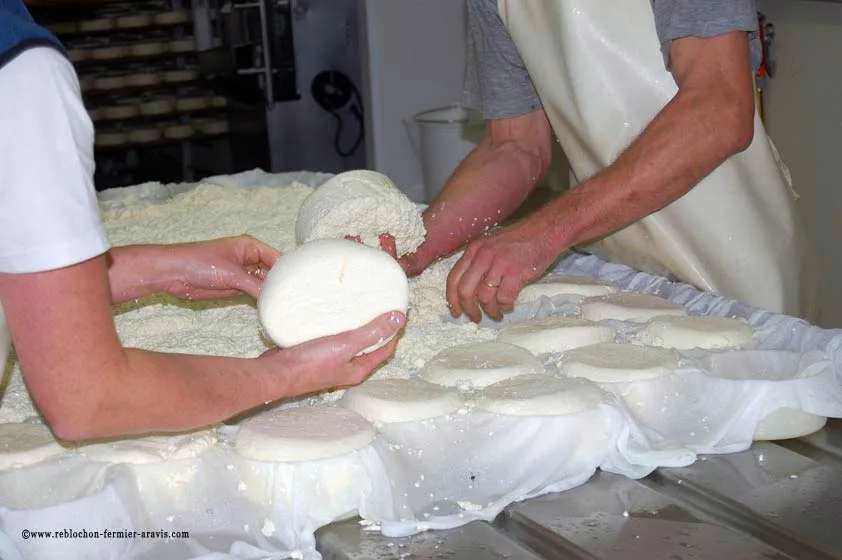
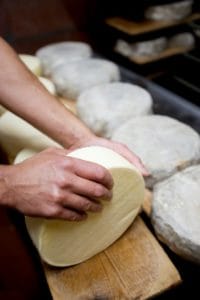
The cheese is made using techniques passed down through generations:
- Adding rennet: immediately after milking, rennet is added to the milk, which then curdles.
- Cutting the curd: the curd is cut into small grains with a curd cutter.
- Moulding: the grains are placed in cloth-lined moulds, then the cheesemaker adds the red or green marker.
- Pressing and salting: the cheese is pressed, removed from its mould, then salted.
- Aging: the cheese is left to dry for a few days, then moved to the aging cellar, where it is regularly washed and turned on spruce boards. Farmhouse reblochon spends at least eight days on the farm before being handed over to an affineur.
Where can you discover reblochon in Haute-Savoie?
That’s where Haute-Savoie has an advantage: you can see reblochon being made, not just buy it.
The Farto cooperative in Thônes
Thônes bills itself as the capital of reblochon. It is home to Le Farto, the cooperative of farmhouse reblochon producers, at 40 avenue d’Annecy. It usually offers guided tours of its cellars with tastings, by reservation through the Thônes tourist office. The tours are currently suspended due to renovation work, so check before visiting. The farm shop sells farmhouse reblochon and other Savoie cheeses.
The farms of the Aravis
Many producers in La Clusaz, Le Grand-Bornand, Manigod and Thônes open their doors to show visitors how their cheese is made and sell their products, including Sandra and Pierre in Saint Jean de Sixt (website: https://www.reblochon-fermier-aravis.com/). In summer, some even offer farm tours and snacks by reservation. The Aravis tourist offices keep an up-to-date list. To plan your stay, see our page on the Aravis mountain range.
The Reblochon Festival in La Clusaz
Every summer, La Clusaz dedicates an entire day to its cheese at Bossonnet, at the foot of the ski lifts. The highlight is the making of a farmhouse reblochon in a huge copper cauldron. The day also includes a parade of herds, demonstrations of traditional crafts and folk dancing. Admission is free. Find the programme in our article on the Reblochon and Handicrafts Festival.
At the markets
Village markets are still the ideal place to buy farmhouse reblochon directly from the producer. See our guide to markets in Haute-Savoie.
How should you enjoy and store reblochon?
On its own is the best way to bring out its aromas. Take it out of the refrigerator an hour before serving, and enjoy it with country bread and a white wine from Savoie.
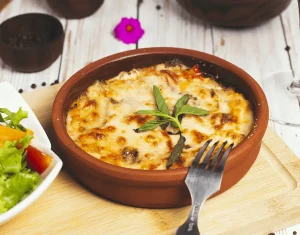
In cooking, it is of course the star of tartiflette, but it also works beautifully in croziflette, gratins, soups and Savoyard burgers. Find inspiration in our Haute-Savoie recipes, especially the Tartiflette recipe.
To store it, keep it in its original packaging, on its spruce board, in the refrigerator’s vegetable drawer. Once cut, eat it within a few days.
A note of caution: as reblochon is made with raw milk, eating it uncooked during pregnancy is not recommended. Cooking destroys any germs that may be present, so a well-browned tartiflette is fine.
Reblochon or « tartiflette cheese »: what’s the difference?
« Tartiflette cheese » sold in supermarkets is not reblochon! It is often made with pasteurised milk and standard starter cultures, and does not benefit from the protection or regional roots of the AOP. It is cheaper and gives consistent results, but it has neither the aromatic richness nor the history of real reblochon. For an authentic tartiflette, nothing can replace AOP reblochon, preferably farmhouse-made.
Reblochon FAQ
What type of cheese is reblochon?
It is a pressed, uncooked cheese with a washed rind, made with whole, raw cow’s milk in Haute-Savoie and the Val d’Arly.
What is the difference between farmhouse and dairy-made reblochon?
Farmhouse reblochon (green marker) is made on the farm with milk from a single herd, twice a day. Dairy-made reblochon (red marker) is made at a cheese dairy with milk from several farms.
Where does the name « reblochon » come from?
It comes from the local dialect word « rebloche », which referred to the second milking carried out in secret by farmers in the Aravis in the Middle Ages to avoid paying part of the dues owed to the owners of the mountain pastures.
What is the best reblochon?
It depends on your taste. Farmhouse reblochon has a more pronounced flavour, while dairy-made reblochon is milder. The important thing is to choose an AOP reblochon and enjoy it when properly ripe: the paste should feel soft under your finger.
How do you eat reblochon?
Enjoy it on its own, at room temperature, with bread and a white wine from Savoie, or cooked in a tartiflette, gratin or croziflette.
Where can you buy farmhouse reblochon in Haute-Savoie?
Directly from farms in the Aravis, at the Farto cooperative shop in Thônes, or at village markets.